
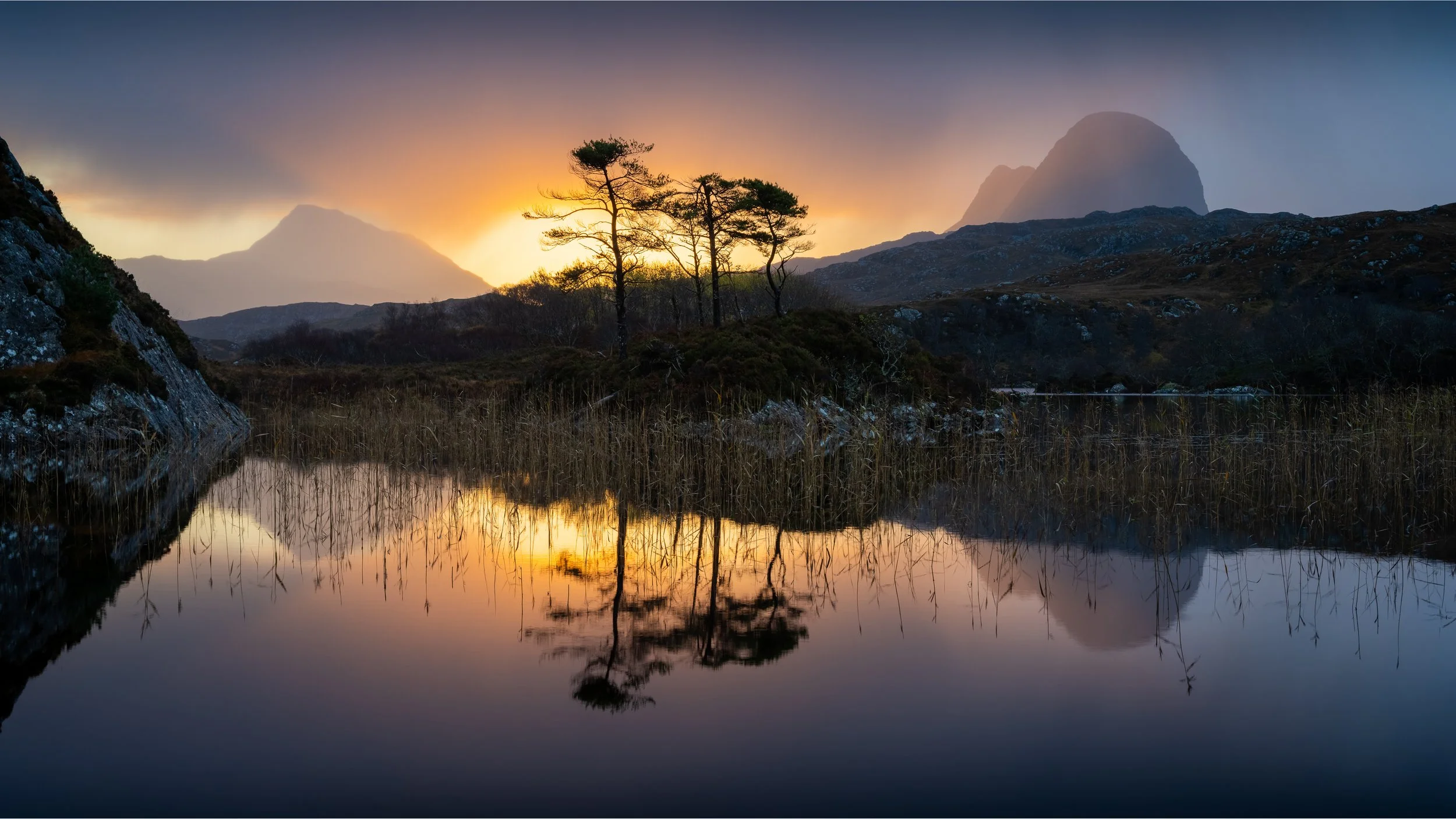
The Ultimate Guide to Photographing Assynt & Coigach
A complete guide to landscape photography in one of Scotland’s most spectacular mountain landscapes, including the best locations, seasons, conditions and practical advice from years of exploring the area.
Why Photograph Assynt & Coigach?
In truth, this is something of a rhetorical question. Most of you will have seen at least a handful of images from the region and will already understand the appeal of landscape photography in Assynt & Coigach.
There is a uniqueness to Assynt & Coigach that is unmatched in any other region of Scotland, indeed unlikely anywhere else in the world. In many ways, it is difficult to explain using words alone and perhaps that is why many of us would resort to photographing Assynt & Coigach instead. Maybe it’s the mountains? The iconic profiles are undeniably more than just an amalgamation of rock and earth piled on top of each other. Suilven, Stac Pollaidh, The Fiddler - each one seems to have its own individual personality, character and secrets just waiting to be unveiled. Perhaps it’s the coastline? Sparkling blue oceans, towering sea stacks and pristine white beaches. Achmelvich Bay, Clachtoll, Stoer Beach - each one a jewel along the winding treasure trove of the shore. Or possibly its the cnoc and lochan landscape? Hundreds of little lochans littered amongst the many folds of the vast expanses in between each of the monolithic mountains. One idyllic journey along the mazy road to Lochinver provides you with an idea of the vastness of this area.
I imagine one would require an entire lifetime to be able to comprehensively photograph Assynt & Coigach. There are many possible perspectives to the different mountains and a vast, remote wilderness that will be hiding many unique foreground options. Seasonal variation is very noticeable here too, with the winter months bringing the possibility of snow to lower elevations and the summertime providing some optimal directionality of sunset and sunrise light. In this guide, I shall attempt to provide you with a foundational knowledge so that you too can go and experience the magic of Assynt & Coigach for yourself, and hopefully come away with some imagery that conveys what will undoubtedly have been a memorable experience for you.
If you would like to experience Assynt & Coigach with expert guidance, I also run small-group expeditions that explore some of the region's lesser-known corners, helping participants develop both their mountain photography, expedition skills and their understanding of this remarkable landscape.
Assynt & Coigach - At a Glance:
Region: Northwest Scotland
Best seasons: Summer, Winter
Physicality: Easy - Challenging
Best for: Mountains, Coast, Wild Camping
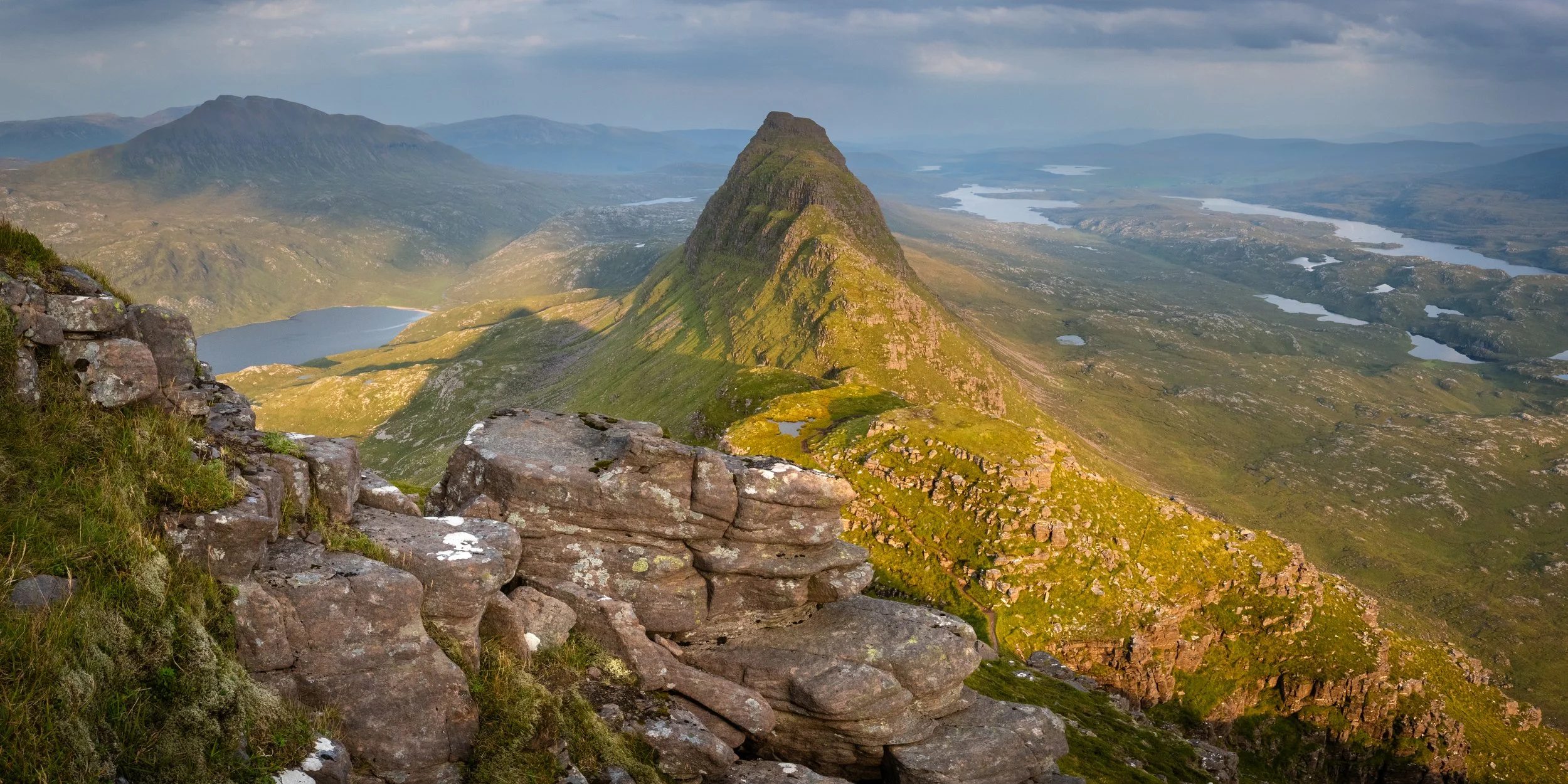
Where is Assynt & Coigach?
The exact boundaries for Assynt & Coigach may be somewhat contested depending upon the use case, for example, the historic parishes boundaries differ somewhat to the formal borders outlined in the Assynt-Coigach National Scenic Area (NSA) - which legally protects the region’s landscapes. I shall be referring to the latter in this guide, as this perimeter includes all of the main relevant locations for the purposes of photography.
I do feel strongly obliged to give honourable mention to the mountain range that forms Ben More Assynt and Conival - the only two hills that boast Munro classification in this area. The ridge adjoining the two summits is rugged and rocky, and provides some interesting opportunities for images with the iconic hills of Assynt in the background.
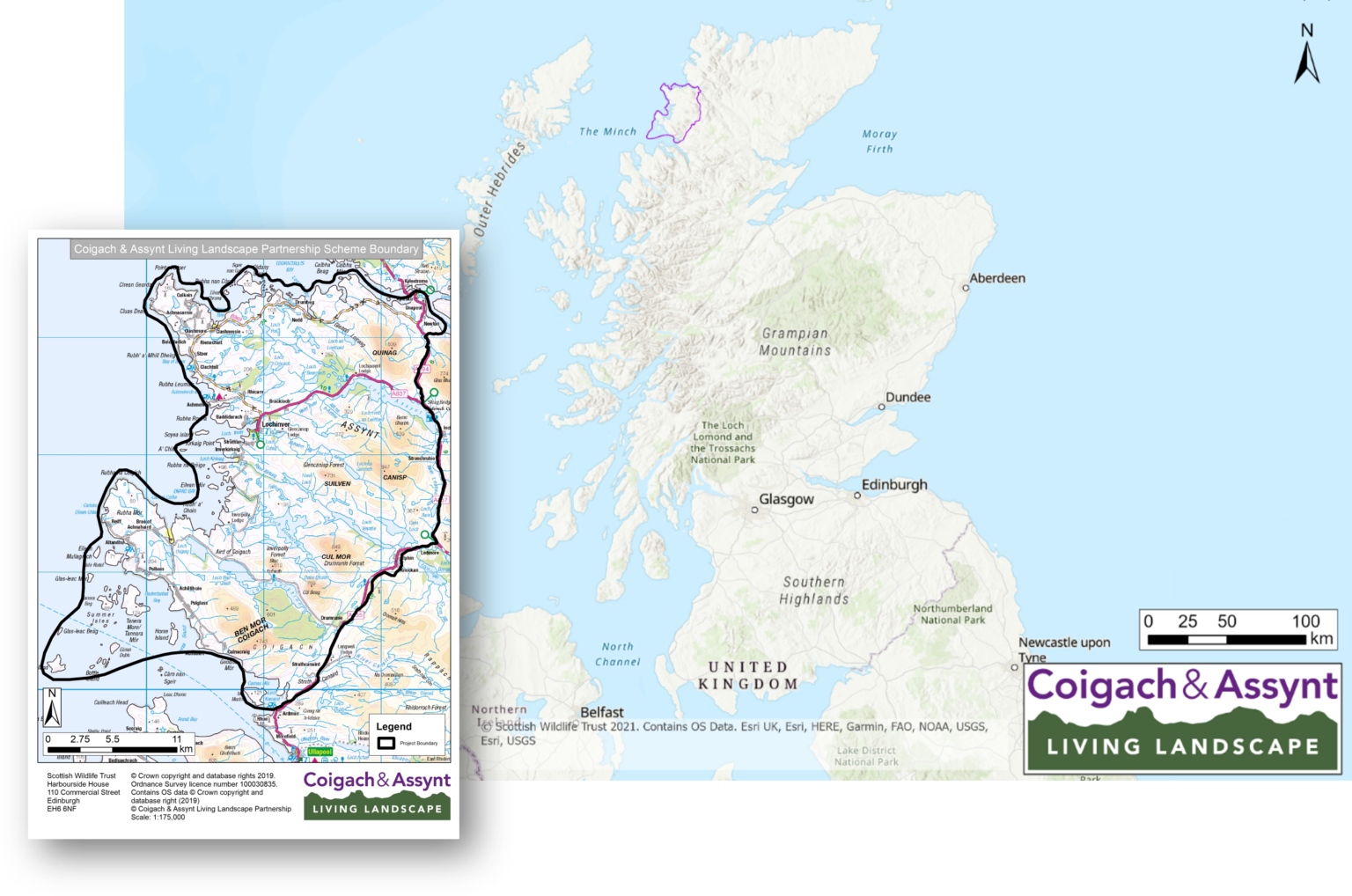
© Assynt & Coigach Living Landscape Partnership 2019
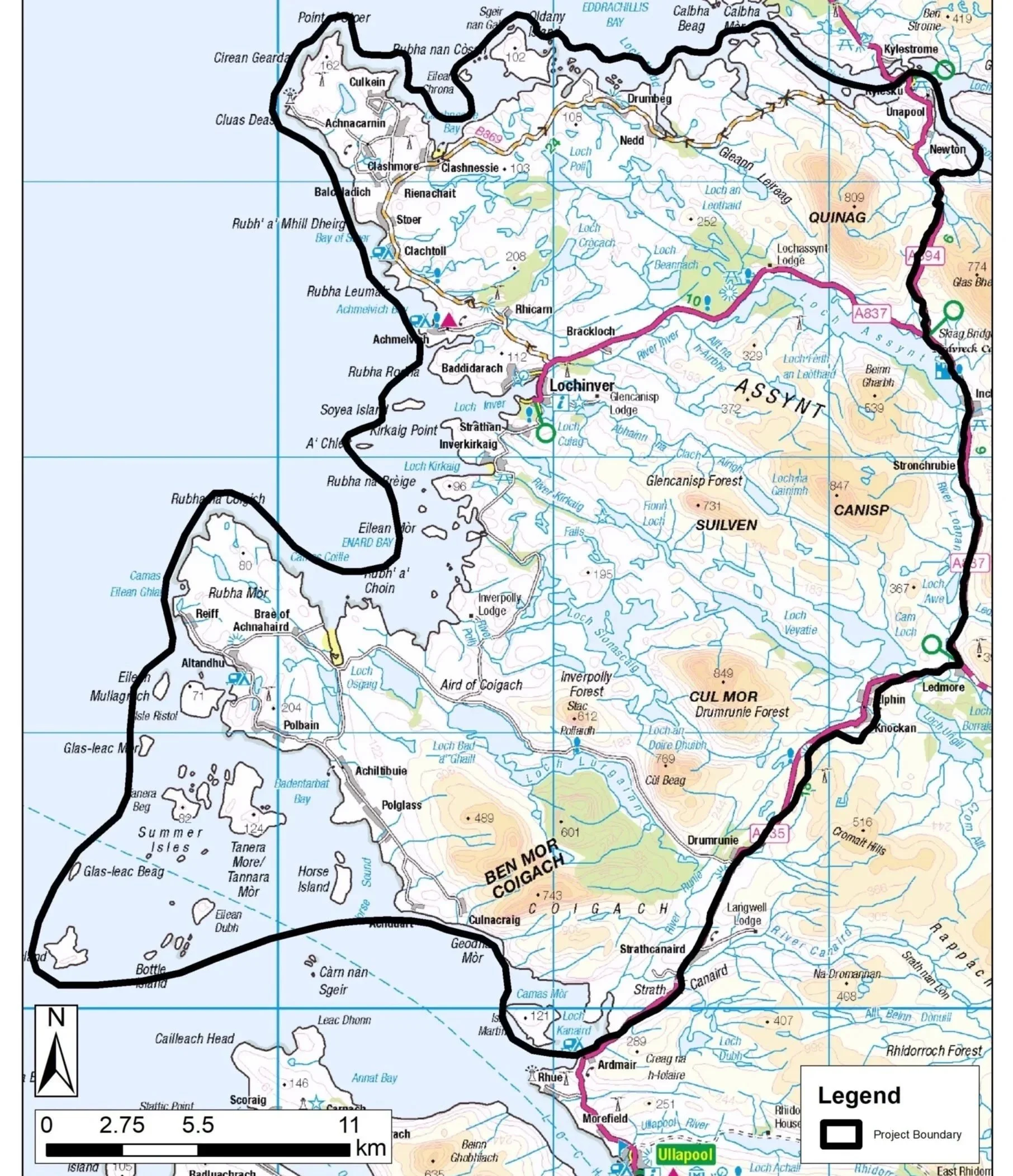
© Assynt & Coigach Living Landscape Partnership 2019
Boundaries
Assynt lies to the north and Coigach directly to the south. The precise boundary that adjoins the two follows a natural waterway from west two east: the River Kirkaig, Fionn Loch and Loch Veyatie. When observed as independent districts, the boundaries are clearly established by natural elements within the landscape.
Assynt Boundaries:
North: Formed by the marine waters of Eddrachillis Bay and Loch Glencoul, near Kylesku.
West: The Atlantic Ocean, indented with many rocky bays like Clahtoll and Achmelvich.
South: The River Kirkaig, Fionn Loch, Loch Veyatie line (bordering Coigach)
East: a long ridge of inland mountains, culminating in Conival and Ben More Assynt.
Coigach Boundaries:
North: The River Kirkaig, Fionn Loch, Loch Veyatie line (bordering Assynt).
West: The Minch, Ennard Bay, the Summer Isles and the Rubha Còigeach peninsula.
South: Loch Broom and Ardmair Bay (just north of the port town of Ullapool).
East: Formed by the single-track road and glen, Strathkanaird, leading up to Elphin.
Access Information
The landscape of Assynt & Coigach is extremely delicate and visitors must be respectful and responsible of a number of key considerations. Public access in Scotland is legally protected, however this is entirely dependent upon your behaviour. I strongly encourage anybody planning a visit to ensure their time in the region is not detrimental to the landscape and leaves no identifiable trace. I imagine that the vast majority of readers will empathise, it is generally just common sense after all, however there is a growing minority of individuals that do visit and seemingly have no regard or care for the impact left in their wake. If you are one of those individuals, please simply stay away and reconsider your life choices.
Now that rant is over, some information regarding those aforementioned key considerations.
Parking & Vehicle Access:
Single Track Lanes: Most of the roads threading though Assynt & Coigach are narrow, single tracks lanes with passing places, with a national speed limit applied (I highly advise you do not meet this limit, drive slowly with consideration to other road users and wildlife).
Passing Place Rule: You must not park in passing places or on roadside verges. Stop on the left hand side of the road. If the passing place is on the right, allow the oncoming vehicle to stop in the passing place. If there is a car behind you, pull into a passing place to allow them to pass - this is good manners. Locals will appreciate you doing this!
Parking: Use established car parks for your photoshoots. For example. the car park on the Inchnadamph Estate for views/hike to Suilven; Stac Pollaidh walkers car park etc.
Responsible Visiting for Photographers:
Drone Regulations: Using a drone can be tempting for unique perspectives of the dramatic ridges on the mountains, but you must follow guidelines from the Civil Aviation Authority’s Drone Code. Be highly sensitive to the ground-nesting birds that are present during the spring/summer breeding seasons - disturbing wildlife with a drone is a criminal offence under the Wildlife and Countryside Act.
Peat Bog and Path Erosion: The terrain in Assynt & Coigach is very susceptible to erosion. Avoid trampling on fragile mosses and expanding muddy bogs where possible. Try to stick to established paths or rocky surfaces if you are wandering off-piste.
Stalking Season: Be aware of deer stalking activity between the months of July-October. Check the local estates planned shoots on the Heading for the Scottish Hills service online.
Wild Camping Guidance:
Vehicle Distinction: parking in a campervan, motorhome or car for the night is not wild camping, this is overnight parking. Use designated campsites or parking bays that are not restricted by overnight parking.
No Open Fires: The ground in Assynt & Coigach is very peaty and susceptible to burning. There have been notable wildfires in recent years in the area causing immense damage to wildlife habitat. Use a self contained gas stove for cooking.
Pitching: Pitch for one night and then move on. Pitch later in the day and leave early where posisble to minimise impact. Strictly leave no trace. Waste management policy is to take everything home with you. For toileting, dig a hole and bury it. Do not leave toilet paper behind.